


Chapati casero con estofado de ternera contundente
La receta de hoy incluye un sabroso chapati de África Oriental con un estofado de ternera riquísimo: una de las cenas favoritas, perfecta para congelar y fácil de aprovechar como sobras.

Ingredientes
- Harina: He usado harina de trigo común y harina integral para esta receta.
- Sal: Aporta sabor a la masa y ayuda a que suba cuando se calienta en la sartén.
- Aceite: He usado aceite de oliva para esta receta, pero puedes usar cualquier aceite que prefieras.
- Agua: He usado agua caliente en esta receta para darle un sabor más tradicional.


Consejos y trucos de Keesha
- Añade el agua poco a poco, siente la masa: Vierte el agua poco a poco mientras mezclas. Aquí me guío más por el tacto que por las medidas; la masa debe quedar suave pero no pegajosa.
- Enharina la superficie y manos a la obra: Una superficie ligeramente enharinada facilita el amasado y le da vida a la masa.
- Deja que repose: Una vez que la masa esté lista, déjala reposar durante 30 minutos. El gluten se relaja, lo que te permite obtener un pan plano y suave que se cocina de maravilla.
- Extiende la masa de forma uniforme para que se infle bien: Intenta mantener un grosor constante al estirarla. Déjala a algo menos de 0,5 cm, girándola sobre la marcha para que se infle perfectamente.
- Dora la ternera primero: No te saltes este paso. Dorar la carne aporta mucha intensidad al estofado. Suelo hacerlo por tandas para que cada trozo quede bien sellado.

Variaciones de la receta de chapati
- Integral: Usa harina de trigo integral para obtener el beneficio adicional de más fibra y energía duradera.
- Especias: Añade comino, cilantro o cardamomo para darle más sabor.
- Relleno: Rellénalo con verduras cocinadas o carnes.
- Hierbas: Espolvorea perejil, albahaca u orégano por encima.
- Crujiente: Pincela con mantequilla antes de cocinar para que se dore más rápido.
- Otras harinas: Prueba con harina de centeno, espelta, trigo sarraceno o avena.
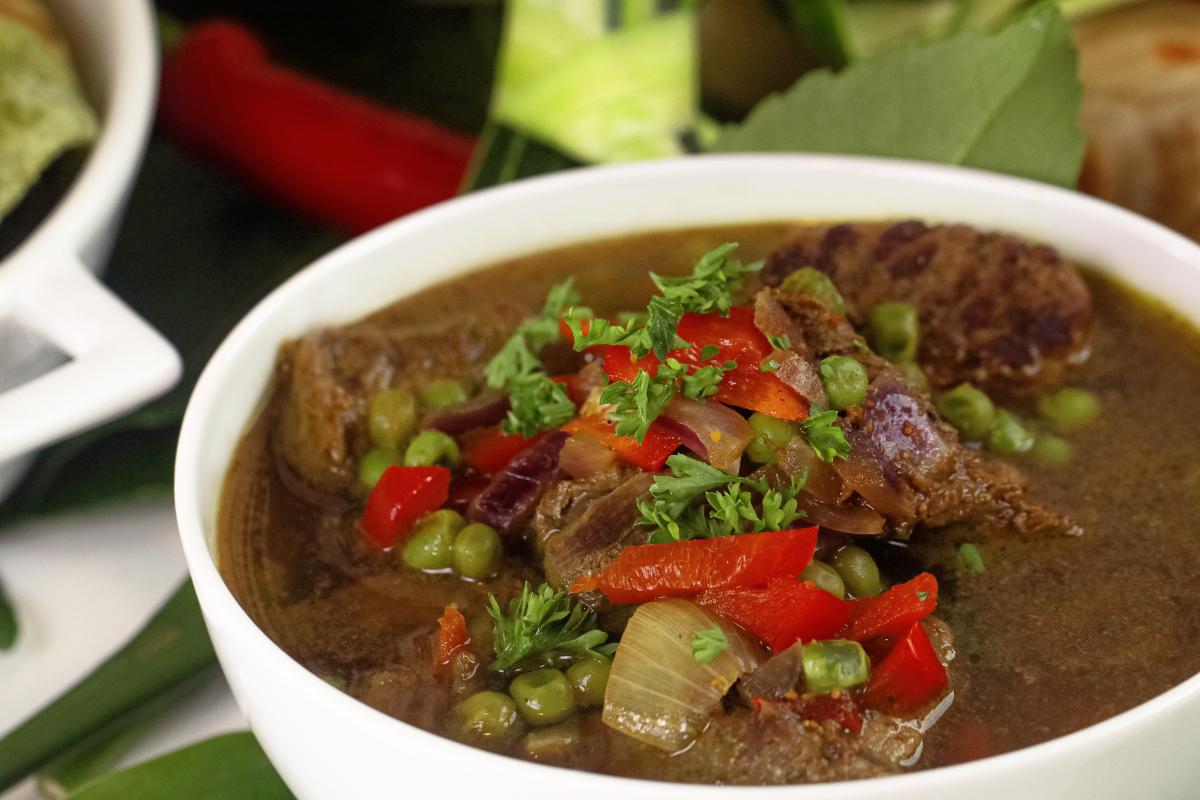
Guarniciones para servir
- Verduras salteadas o a la parrilla: Sazona las verduras con sal, pimienta y hierbas. Saltéalas en una sartén hasta que estén tiernas, o cocínalas a la parrilla para obtener un sabor ahumado que combina de maravilla con el tajín.
- Sukuma Wiki: Col rizada tradicional con cebollas y tomates.
- Alubias o soja verde: Hierve las alubias o la soja verde con especias para una guarnición contundente.
👉🏽 Echa un vistazo a estas recetas clásicas kenianas que combinan perfectamente con el chapati y el estofado: Githeri keniano, repollo frito keniano y kachumbari keniano.
Cómo guardar y recalentar el chapati
Guarda el chapati envuelto en papel de aluminio o papel vegetal a temperatura ambiente hasta 2 días, refrigerado hasta 3 días, o congelado en un recipiente o bolsa hermética hasta 1 mes. Recalienta los chapatis en el horno, microondas o sartén hasta que estén calientes.


Preguntas frecuentes sobre el chapati africano con estofado de ternera
Más recetas africanas
¿Te apetecen sabores africanos intensos? Prueba el pollo Mafe con una rica salsa de cacahuete, el Amala para un bocado tradicional, o la Tangia Marrakechia llena de especias aromáticas.

Receta de chapati de África Oriental con estofado de ternera
Ingredientes
Para el chapati natural
- 1 taza harina de trigo (todo uso)
- 1 taza harina de trigo
- 1/2 cdta. canela molida, opcional
- 1 cdta. azúcar
- 1/2 cdta. sal
- 2 cda. aceite de oliva
- 1 taza agua templada
Para el chapati de espinacas
- 1 taza hojas de espinaca baby
- 3/4 taza agua templada
Para el chapati picante
- 3 chiles picados
- 3/4 taza agua templada
Para el estofado de ternera keniano
- 2-3 cda. aceite de oliva
- 2 libras estofado de ternera (como puntas de solomillo), cortado en dados del tamaño de un bocado
- 2 cebollas medianas, cortadas en trozos grandes
- 2 tallos de apio, en rodajas
- 6 dientes de ajo, picados
- 1 guindilla Scotch bonnet, sin semillas, picada, opcional
- 2 cdta. curry en polvo (a tu gusto)
- 1 cdta. pimentón ahumado
- 1 cdta. pimienta blanca molida
- 4 tomates, en dados
- 1 taza puré de tomate (no concentrado ni salsa)
- 2 ramitas de tomillo fresco, deshojadas (solo las hojas)
- 3-4 tazas caldo de ternera bajo en sodio
- 1 pimiento rojo, sin semillas y en tiras
- 2 tazas guisantes frescos
- 1/2 taza perejil fresco picado
- Escamas de sal marina, al gusto
- Pimienta negra recién molida, al gusto
Instrucciones
Prepara la masa de chapati
- En un bol grande, bate con unas varillas la(s) harina(s), la canela, el azúcar y la sal. Incorpora el aceite de oliva.
- Para el chapati con sabor, tritura espinacas + agua o chiles + agua. Usa esto en lugar de la 1 taza de agua normal.
- Añade el líquido poco a poco mientras mezclas hasta que se forme una masa suave y elástica. Amasa sobre una superficie enharinada durante unos 10 minutos.
- Divide en 4–6 porciones, cubre con film transparente y deja reposar 30 minutos.
Da forma al chapati
- Con un rodillo, estira una bola de masa sobre una superficie ligeramente enharinada.
- Luego, enrolla el disco plano empezando por un extremo.
- Después, aplana ligeramente este rollo. Coge un extremo del “rulo” y empieza a enrollarlo hacia dentro. Sigue girándolo sobre sí mismo hasta formar otra bola con forma de disco. Mete el extremo exterior hacia el centro.
- Por último, vuelve a estirar esta bola hasta obtener una lámina redonda y plana. Cada lámina debe tener solo ⅛ de pulgada de grosor. Es un pan plano muy fino con muchas capas.
- Repite todo el proceso hasta dar forma y estirar todos los chapatis.
Cocina tus chapatis
- Calienta una sartén antiadherente a fuego medio-alto.
- Cocina cada chapati 1–2 minutos por cada lado, hasta que aparezcan manchas doradas. No añadas mantequilla ni aceite a la sartén.
- Por último, mientras el chapati aún esté caliente, añade una nuez de mantequilla y pincélala por toda la superficie.
- Retira el chapati del fuego. O bien mantenlo caliente en el horno a baja temperatura o deja que se enfríe.
Prepara el estofado de ternera keniano
- Calienta aceite de oliva en una olla grande o una cazuela de hierro. Dora la ternera por todos los lados, luego retírala y reserva.
- En la misma olla, sofríe la cebolla y el apio durante 2–3 minutos. Añade el ajo y la Scotch bonnet (si la usas) y cocina 1 minuto.
- Incorpora el curry en polvo, el pimentón ahumado y la pimienta blanca. Cocina 30 segundos, hasta que desprenda aroma.
- Vuelve a poner la ternera en la olla. Añade los tomates en dados, el puré de tomate, el tomillo y 3 tazas de caldo. Lleva a ebullición, luego baja el fuego y cocina a fuego lento 1–1½ horas, hasta que la ternera esté tierna. Añade más caldo si hace falta.
- Incorpora el pimiento y los guisantes. Cocina a fuego lento 5 minutos.
- Termina con perejil picado y ajusta de sal y pimienta negra.
Sirve
- Acompaña el chapati caliente con una buena ración de estofado de ternera. Decora con perejil fresco y ¡a disfrutar!